Science
Why can you see the Moon during the day?
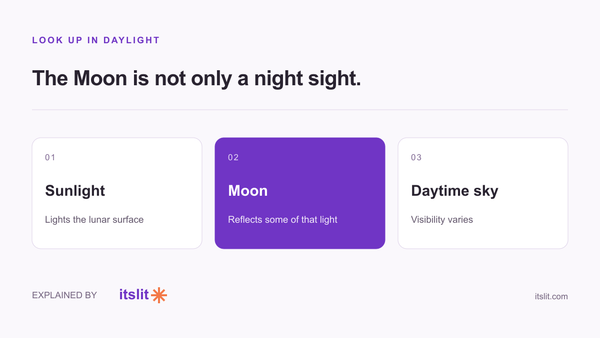
The Moon reflects sunlight during daytime too. Whether you can spot it depends on its position, phase, your location, and the view of the sky.
Science
The Moon reflects sunlight during daytime too. Whether you can spot it depends on its position, phase, your location, and the view of the sky.
Science
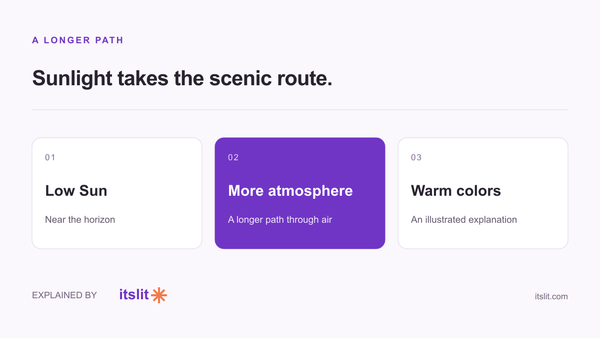
Sunlight takes a longer route through the atmosphere when the Sun is low. More short-wavelength light is scattered away, changing the colors that reach us.
Science
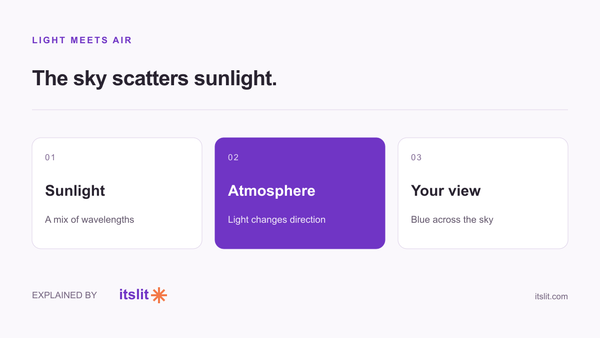
Air molecules scatter shorter wavelengths of sunlight more strongly. What reaches your eyes is light redirected by the atmosphere, not a blue surface overhead.

Technology
Send someone straight to the useful moment with a timestamped link, plus enough context to explain why you chose it.
Technology
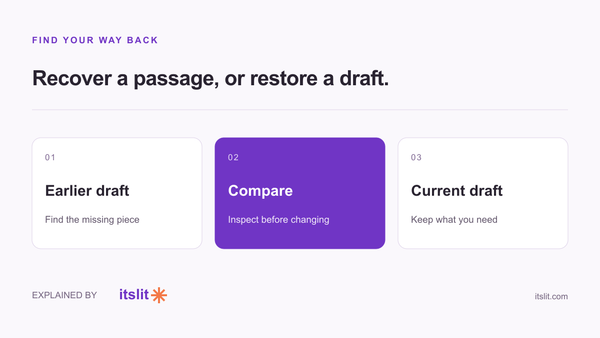
Use version history to recover an older draft—or copy it first when you only need one missing passage.

Games
A familiar word still has to fit the plate and its word list. Here’s how to tell a missing tile from a dictionary rejection—and why neither uses your turn.
Games
Make one word from seven letters, check it, then choose your final answer. Here’s how itslit’s daily plate works—and what happens before you lock it in.
Science
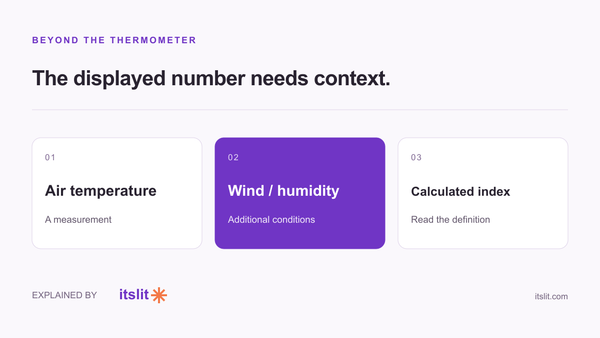
Feels-like values put conditions such as wind or humidity alongside air temperature. The calculation has assumptions, so it is not a second thermometer reading.
Science
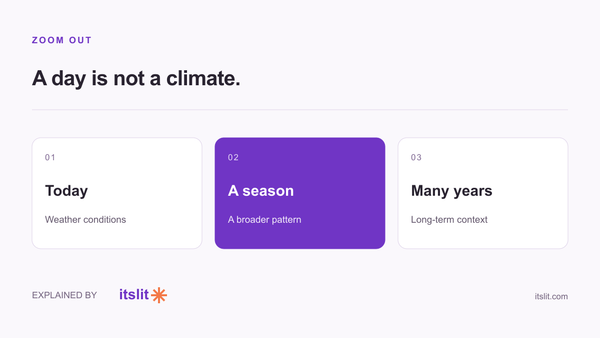
Weather describes shorter-term atmospheric conditions. Climate describes longer-term patterns—and the reference period matters when someone says a day is “normal.”
Science
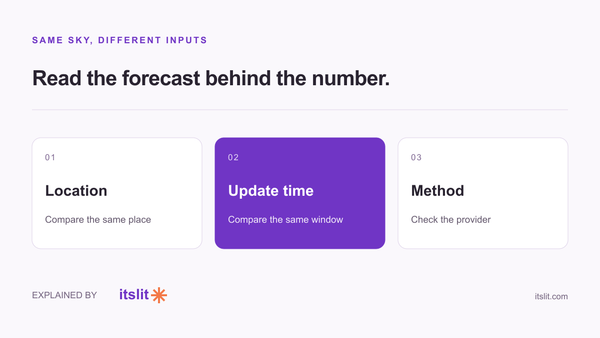
Different models, forecast windows, and symbols can turn the same uncertain weather into different-looking answers. Compare the details before declaring one app wrong.
Science
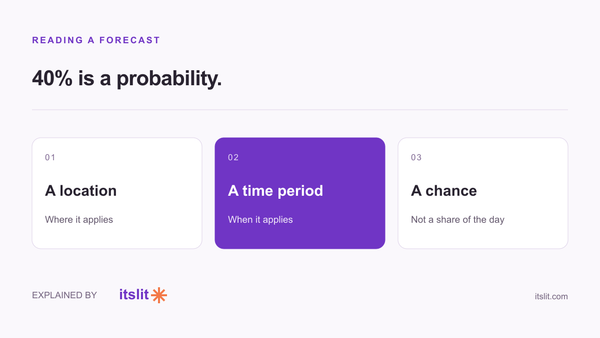
The percentage describes a chance of measurable rain at a location during a stated period. It does not tell you how much of your day will be wet.

Technology
Yes, ChatGPT can search the web. The next step is checking whether the sources actually support the answer you need.